· Edition #1

The Busbar

Victron introduces a modular Microgrid architecture requiring no central controller; SuperPack NG and Lynx Smart BMS NG both receive firmware updates; EVE MB31 314Ah cells dip below $85 at US retail.

Victron Microgrid: independent power banks share load without a central controller

Victron's new Microgrid solution lets separate, standalone inverter/charger installations synchronise on a shared AC bus using frequency droop — no communication cabling between units, no central controller, scalable to 400kW with existing MultiPlus and Quattro hardware.

On 13 April Victron Energy published details of its new Microgrid solution — a way to build large off-grid power systems by connecting independent inverter/charger groups in parallel without adding a central controller or running data cables between them.

The architecture divides a system into "Power Banks." Each Power Bank is a complete, standalone Victron installation: its own MultiPlus, MultiPlus-II, Quattro, or Quattro-II inverter/chargers, its own battery bank, its own GX monitoring device. Multiple Power Banks then connect to a common AC bus. Load sharing is handled by frequency droop: as total system load increases, bus frequency drops slightly, and each Power Bank independently increases its output in response. No Power Bank needs to know what the others are doing — there is no inter-unit data link.

Scaling works by adding another Power Bank. Victron quotes a maximum system capacity of 400kW. Because each Power Bank is fully independent, taking one offline for service or fault recovery does not interrupt the remaining units; they continue supplying the AC bus.

The capability is delivered via dedicated VE.Bus firmware versions S97 and S98, available for the existing MultiPlus, MultiPlus-II, Quattro, and Quattro-II range. No new hardware is required. Victron identifies target applications as generator rental fleets, construction sites, events, and remote communities or industrial facilities where traditional high-voltage grid infrastructure is not practical.

The frequency-droop approach differs from Victron's existing VE.Bus parallel and three-phase system architecture, which requires communication cabling and a designated master unit. Victron has published an HTML5 and PDF technical manual; deployment is intended to go through a trained Victron distributor.

Lynx Smart BMS NG firmware v1.17 corrects DVCC charge instability

Released 14 April, the update stabilises charging under DVCC control, preventing unnecessary charger shutdowns while keeping cell voltages within safe limits. A regression removes per-module serial numbers from cell diagnostics.

Victron released firmware v1.17 for the Lynx Smart BMS NG on 14 April. The primary change addresses DVCC (Distributed Voltage and Current Control) behaviour: the previous firmware could cause charge current to oscillate and chargers to switch off unnecessarily while the BMS was actively limiting charge voltage. v1.17 stabilises this without relaxing the safe voltage ceiling.

A regression has been noted by users: v1.17 removes the per-battery-module serial number from the highest/lowest cell voltage and temperature display, showing "0" instead of the unit identifier. This affects installations with multiple Lynx battery modules where the serial number was used to locate a problem cell. Victron is aware; no fix timeline has been given.

SuperPack NG firmware v1.05 enables continuous 2C discharge and widens temperature range

Released 7 April, the update unlocks full 2C continuous discharge on the SuperPack NG range and extends both charge and discharge operating temperature limits. Self-heating remains active down to -30°C.

Victron released firmware v1.05 for the Lithium SuperPack NG on 7 April. The primary change expands continuous discharge to 2C — a 100Ah SuperPack NG can now supply 200A continuously within safe temperature and voltage limits, up from the previous 1C rating. Victron also extended the permitted charge and discharge temperature ranges; specific degree values were not published in the release notes.

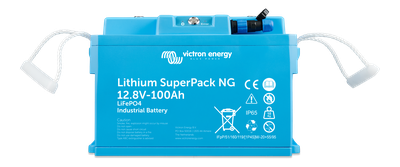
The SuperPack NG is a sealed, self-contained LiFePO4 pack with an integrated BMS, built-in self-heating that enables charging down to -30°C, and an on/off switch for storage. Current shipping variants are 12.8V/100Ah, 12.8V/200Ah, and 25.6V/100Ah. The 25.6V/200Ah and 51.2V/100Ah are listed on the product page as available variants; availability by region will vary. The 2C rating makes the pack substantially more usable for engine-start backup or high-current inverter loads without paralleling units.

Venus OS v3.72 patches ESS safeguard, Pylontech updater, and Node-RED paths

Released 30 March, v3.72 corrects an ESS issue that caused unnecessary battery discharge across multiple phases, restores Pylontech detection on CAN, and fixes missing Node-RED Custom Control paths. v3.80 beta testing is paused pending stability on the v3.7x branch.

Venus OS v3.72, released 30 March, addresses several issues introduced by v3.70. The most operationally significant fix is an ESS safeguard correction: v3.71 and earlier could apply an overly restrictive AC power setpoint that caused batteries to discharge across multiple phases when they should not have. v3.72 corrects this.

Additional fixes: Pylontech battery detection failures on earlier CAN networks (causing units to disappear from VRM) are resolved; minimum/maximum cell voltages now display correctly in millivolts after regression in v3.71; Node-RED Custom Control node paths are restored; a memory leak and VRM logger crash at startup are patched. Screen blanking on non-Victron HDMI displays is disabled to prevent frozen readouts on third-party screens.

Victron notes that v3.72 temporarily pauses the v3.80 beta programme while the v3.7x branch is stabilised. v3.72 is available via the GX device update menu or VRM remote update.

Victron 2026 pipeline: 48V 20kVA MultiPlus, split-phase inverter, TR Smart 48/12 60A DC-DC

Victron's confirmed 2026 product additions include its largest-ever single inverter/charger, a new non-isolated 48V-to-12V DC-DC charger, and a standalone 120/240V split-phase unit currently in development.

Trek Systems, a US Victron integrator, has compiled Victron's confirmed and announced 2026 product additions. The headline unit is the MultiPlus 48V 20000VA — Victron's largest single inverter/charger — expected in mid-2026 for 120V North American markets; the 230V version is already available. A standalone 120/240V split-phase inverter/charger delivering true split phase from a single unit (rather than requiring two stacked MultiPlus units) is also confirmed as in development, with no ship date announced.

The TR Smart 48/12 60A — a non-isolated DC-DC step-down charger — addresses a gap in the current lineup. At 60A output (720W), it is intended for 48V primary systems with meaningful 12V loads such as lighting, pumps, and USB distribution; the current non-isolated Orion TR Smart tops out at 30A (360W). An Orion XS 12/12 70A is also listed for mid-to-late 2026. New Blue Smart IP43 chargers supporting 36V and 48V battery banks were expected in Q1 2026. No pricing has been announced for any of these products.

EVE MB31 314Ah cells below $85 at US retail; DIYSolarForum weighing raw-cell economics

Four-pack pricing for Grade A EVE MB31 cells now works out to $83–$85 per cell at US retailers, narrowing the cost gap versus pre-assembled 48V packs and driving active forum discussion about when raw-cell builds make financial sense.

EVE MB31 Grade A LiFePO4 prismatic cells (314Ah, 3.2V) are currently listed at US retailers for approximately $83–$85 per cell when purchased in four-packs — 18650batterystore.com shows a four-pack at $333 (promotional) versus a $445 regular price. Individual cell pricing is higher at most outlets.

A DIYSolarForum thread, "Is it time to start building batteries from raw cells?", has attracted substantial discussion in recent weeks. Participants are weighing the narrowed gap between raw-cell build cost and pre-assembled pack pricing. At $83–$85 per cell, a 16-cell 48V 314Ah bank (approximately 16kWh usable) has a cell cost of $1,330–$1,360 before BMS, busbars, enclosure, and labour; pre-assembled packs of similar capacity from brands such as WattCycle are advertised in the $1,500–$2,000 range. Forum claims about specific pricing are not independently verified by The Busbar.

The Background · Market Analysis

The 314Ah crossover: what the raw-cell economics actually look like in 2026

In early 2024, a Grade A EVE 280Ah prismatic cell cost approximately $85–$100 at US retail, and the conventional wisdom was that builders were paying a premium for the discipline and convenience of a pre-assembled pack. Two years later, EVE and CATL 314Ah cells — a full 12% more capacity per cell — are selling at similar or lower per-cell prices. The question of whether to build from raw cells has a different answer than it did twelve months ago.

How prices got here

The straightforward explanation is production scale. CATL and EVE both expanded 314Ah prismatic output substantially through 2024–2025, and the cell has become something close to a commodity format in the supply chain. US importers have tightened margins as competition increased. The four-pack retail price at 18650batterystore and comparable outlets now works out to $83–$85 per cell for EVE MB31 Grade A. Comparable CATL-format cells are available from parallel suppliers at similar prices.

The consequence is that the raw-cell premium — the cost paid for the ability to select your own BMS, choose your own enclosure, and understand every component — has compressed considerably. A 16-cell 48V bank at current pricing runs approximately $1,330–$1,360 in cells alone, before adding a JK or Daly active-balancing BMS ($80–$200 depending on current rating and feature set), busbars, fuses, and an enclosure.

The pre-built alternative

Pre-assembled 48V 314Ah packs from brands like WattCycle and Redodo are currently advertised in the $1,500–$2,000 range in the US market. The cost gap has narrowed. Forum participants make the point that the pre-built price includes a warranty, factory cell-matching and testing, and fully assembled hardware — and that removing those components from the equation makes the comparison less clean than the cell price alone suggests.

A recurring friction point on DIYSolarForum is BMS ecosystem compatibility. Pre-assembled budget packs occasionally ship with BMS units that have limited or broken communication with Victron DVCC or the Cerbo GX. A current thread documenting Redodo batteries failing to appear in BAT-BMS and Overkill Solar apps illustrates the category of problem: a pack that works as a dumb battery but does not integrate cleanly into a managed system. Raw-cell builders choosing a JK BMS or similar with known Victron compatibility avoid this failure mode — but they are also taking on the responsibility of configuration.

What the forum is not resolving

The active DIYSolarForum thread does not reach a single conclusion, which is appropriate: the right answer depends on builder experience, available time, local cell import availability, BMS ecosystem in use, and whether a person is doing a first build or a third. The forum discussion is most useful as a live record of what builders are actually finding as they work through the arithmetic in April 2026, not as a prescription.

What the thread does establish is that the economic case for pre-built packs as the obviously cheaper option has weakened. For builders already comfortable with LiFePO4 cell handling, capacity testing at delivery, and BMS configuration, the raw-cell route is now genuinely cost-competitive — which was not clearly the case in 2023. Whether that cost difference justifies the additional complexity is a question each builder has to answer for their own situation.

Community Pulse

What the forums are talking about this week

A thread in r/diysolar this week is looking for Android beta testers for WireSizer Pro, described by the developer as a wire-sizing app with a DC-system focus. The original WireSizer has been a long-standing reference for voltage-drop calculations in the community; the Pro variant appears to be a more feature-complete rebuild. The developer is specifically requesting Android feedback before wider release.

On r/vandwellers, a thread titled "It's nearly official, I can run AC 24/7 offgrid" documents a van build sustaining 24/7 air conditioning from solar and battery. The replies lean practical — SOC management strategies, inverter sizing notes, battery thermal considerations — rather than sceptical, suggesting the bar for what constitutes a genuinely functional off-grid AC setup has moved within the community.

On DIYSolarForum, an active thread asks whether EVE's own datasheet — specifying a 3.65V per-cell upper charge voltage (58.4V for a 16S pack) — should be followed, or whether the community convention of charging to 3.45–3.50V is the safer choice for long-term cycle life. The debate resurfaces regularly; the thread is a useful snapshot of where community consensus sits in early 2026.

On the Bench

YouTube picks: builds, teardowns, firmware walkthroughs, and reviews

2026 Will Prowse Approved Solar Products: Which Ones Survived?!
Review
DIY Solar Power with Will Prowse · March 2026
Will Prowse's annual product approval review — which 48V and 12V batteries and solar components passed his test regime for 2026. Useful context for anyone evaluating pre-built LiFePO4 packs as an alternative to the raw-cell builds discussed in this week's background.

Product Radar

New and notable components announced or launched this week

Victron Lithium SuperPack NG 12.8V 100Ah
Battery

Sealed LiFePO4 drop-in with integrated BMS, automatic self-heating to -30°C, on/off switch for storage, and 2C continuous discharge (enabled via firmware v1.05).

Not published 12.8V 100Ah/200Ah and 25.6V 100Ah shipping; 25.6V 200Ah and 51.2V 100Ah listed as available variants — regional availability varies
The firmware-enabled 2C rating is the meaningful change this week — it makes the pack useful for high-current loads without paralleling units.
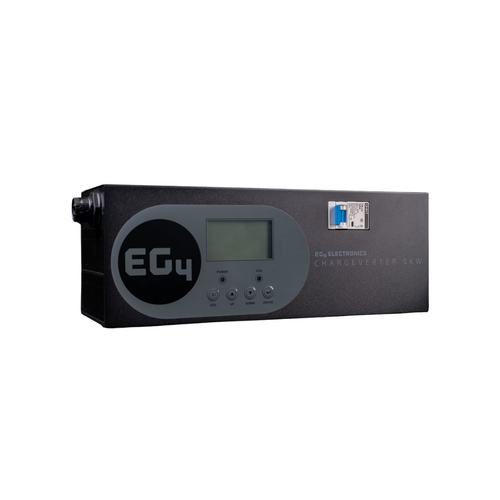
EG4 Chargeverter GC 48V 100A battery charger
Chargeverter GC — EG4 Electronics
Charging

48V 100A AC-to-DC battery charger, 5120W output at 240VAC, accepts 90–264VAC input, includes dry-contact AGS output and built-in breaker.

$549.99 Available now via Signature Solar and third-party retailers
Frequently cited on DIYSolarForum for generator-to-48V-battery charging; the GC variant adds the built-in breaker over the earlier model.
Charging

Non-isolated DC-DC step-down charger for powering 12V loads from a 48V primary system; 60A output (720W).

Not announced Announced for 2026; no confirmed ship date
Addresses a real gap: the current non-isolated Orion TR Smart tops out at 30A (360W), making 48V systems with substantial 12V loads awkward without multiple units.