· Edition #16

The Busbar

Dragonfly amends its complaint against Will Prowse and buys Dakota Lithium for $4 million in the same fortnight; LiTime's Argoseeker outboards finally ship; and Gobel Power puts its own cloud monitoring behind a €27 dongle.

Dragonfly amends its complaint against Prowse — the case slows down, the failure reports don't

In a 14 August update, Will Prowse said Dragonfly Energy has amended its original complaint, pushing any dismissal ruling out by months. He says he has spent $32,000 of his own money, is refusing viewer donations, and that the forum thread collecting Battle Born failures has passed a hundred posts.

Will Prowse published a status update on 14 August in the trade-libel suit Dragonfly Energy filed against him in June, which we covered as that week's lead. The procedural news is small and consequential: Dragonfly has amended its original complaint. Prowse's read is that this resets the clock — if the case is thrown out, he says, "we won't know for another couple months."

He also put a number on the cost. $32,000 spent so far, self-funded, and he is explicitly declining donations: "my viewers need their money… If I'm really screwed, I will absolutely ask." That is worth recording because crowdfunded defence is the usual path in creator-versus-manufacturer disputes, and choosing not to take it changes who can afford to keep going.

The substantive claims have moved too. The DIYSolarForum thread collecting Battle Born failure reports now runs to more than a hundred posts, by Prowse's count — a number that is a forum tally, not an audited dataset, and should be read that way. He describes a Game Changer pack, factory-installed and about eighteen months old, that looked intact externally but had three melted internal components and arcing on the top plate. He also says a viewer's pack melted mid-capacity-test the day before recording, and has shifted his advice from "test yours" to "dispose of them" — arguing the polymer inside the electrical connections creeps and loosens with age, so the risk rises with the pack's age rather than its use.

Two cautions. Prowse is a defendant describing his own case, and Dragonfly's complaint alleges the opposite — that he dismantled structural components and tested damaged units outside spec. None of it has been tested in court. And no regulator has acted: there is no CPSC or NHTSA campaign on these packs, so "it needs a recall," as Prowse puts it, remains his position and not a finding. Separately, he repeated the datasheet claim we reported in June — that the maximum charge current changed from 37.5A to 49A one day before the suit was filed, with both files preserved. Dragonfly has not publicly addressed the timing.

Dragonfly buys Dakota Lithium for $4 million, and posts a 19% sales drop with $6.3 million in the bank

The acquisition closed 31 July — $1 million cash plus $3 million in stock for the brand, IP, inventory and distributor relationships. Six days later Q2 showed net sales down 19% year over year and cash down from $18.3 million to $6.3 million.

Dragonfly Energy closed its purchase of substantially all operating assets behind the Dakota Lithium brand on 31 July for $4.0 million$1.0 million cash and $3.0 million in stock (1,500,000 shares at $2.00, locked up 12 months). The deal covers the brand, intellectual property, inventory, the battery portfolio, and customer and distributor relationships. Dakota Lithium is a Grand Forks, North Dakota outfit selling 12V–72V LiFePO4 into marine, powersports, golf cart and trolling-motor markets on an 11-year warranty.

Dakota Lithium turned roughly $12 million in net revenue in 2025, which Dragonfly describes as below prior years because working-capital and inventory constraints kept product off shelves. It will run as a distinct brand alongside Battle Born, on existing infrastructure; Dragonfly expects it accretive to adjusted EBITDA from Q4 2026. Concurrent lender amendments preserve about $1 million of near-term liquidity through covenant reductions and two quarters of paid-in-kind interest.

The Q2 numbers on 6 August explain the shape of that financing. Net sales $13.2 million, down 19.0% year over year; OEM $8.4 million (−16.1%), direct-to-consumer $4.5 million (−24.7%). Gross margin improved to 33.0% from 28.3%. Net loss $5.5 million, adjusted EBITDA −$1.6 million — a $3.0 million sequential improvement. Cash was $6.28 million at 30 June, down from $18.27 million at year-end. Q3 guidance is roughly $13.5 million and −$2.4 million adjusted EBITDA. Buying distribution reach for $1 million in cash reads differently against that balance sheet than it would against a fat one.

Find on Amazon →

LiTime's Argoseeker outboards ship: 60lb and 120lb thrust, 13.4lb and 16.5lb on the transom

Announced 10 August, roughly on the mid-August schedule LiTime gave in July. The A1 is 24V/700W, the A2 48V/2000W, both clamp-on with wireless remote and cruise control. Plain list pricing is still not published.

LiTime has launched the Argoseeker series, its first move out of batteries and into propulsion — announced 10 August, close to the mid-August window given when we noted the pre-launch in July. Two models, both brushless and both clamp-on transom mounts LiTime puts at a three-minute install.

The A1 runs 24V/700W for up to 60lb of thrust, which LiTime equates to about 2HP of petrol outboard, and weighs 13.45lb. The A2 is 48V/2000W, 120lb thrust, ~5HP-equivalent, 16.53lb, and adds a weed-cutting blade. Both use a 28.22in shaft and a wireless remote with cruise control. LiTime's own figures put the A1 at 4.3–6.2mph on a 330lb boat and the A2 at 7.5–9.3mph on a 660lb boat — vendor numbers, no independent test yet.

Two things are missing. LiTime is quoting launch pricing only behind promo codes rather than publishing a list price, so there is no stable number to report. And the interesting spec for anyone sizing a system — runtime against a given LiFePO4 bank, and continuous rather than peak draw — isn't in the launch material either. A 2000W motor on 48V is a ~42A continuous load; that is the number that decides your battery, and it isn't on the page.

Find on Amazon →

Gobel Power ships its own cloud VRM — and a €27 Wi-Fi dongle to feed it

A Chinese pack builder now runs its own remote-monitoring platform, covering its own BMS, Pace BMS, and the JK Inverter-BMS. Off-Grid Garage walked through it on 15 August. One dongle per parallel bank, read off the master.

Gobel Power has launched a remote-monitoring platform of its own, borrowing Victron's naming and calling it VRM. Andy at Off-Grid Garage demonstrated it on 15 August. It covers Gobel's own BMS and the Pace BMS, plus the JK Inverter-BMS and the JK B-series via the Plink communication board — and it is reachable through a browser or dedicated iOS and Android apps.

The connection hardware is the notable part. A plug-in PWB1 Wi-Fi module, listed at about €27, goes into the RS232/Wi-Fi port on the current Gobel BMS. It's sold separately because you only need one per bank: it plugs into the master BMS and reads every pack paralleled behind it over RS485. Andy's earlier route to the same data was a Waveshare RS232-to-Ethernet server, which worked but wanted a network setup he described as "a bit advanced." The dongle replaces that with something a non-network person can fit. He notes the connector protrudes from the battery's front panel and would be better angled.

Worth watching rather than celebrating. Vendor clouds are convenient right up to the point where the vendor decides what they cost or whether they persist, and this one is a pack maker's cloud rather than an open protocol. The local Modbus and Home Assistant paths still exist; this sits alongside them, and for now the choice is the reader's.

Victron case study: 400Ah and a 3000VA inverter behind just 365W of solar

A four-year overland build published 7 August pairs a 400Ah Lithium NG bank with only 365W of roof solar — a ratio that only works because the alternator, not the roof, is the primary charge source.

Victron published a build write-up on 7 August covering a Mercedes-Benz X250D fitted out for a four-year run across Australia, New Zealand, the Americas and the Silk Road. Installed by Red Dog Campers on the Gold Coast, designed and supplied by Outback Marine Australia. The kit list is conventional Victron: 400Ah Lithium NG (~5.12kWh usable), MultiPlus-II 3000VA, SmartSolar MPPT 100/30, Lynx Smart BMS NG 500A, Cerbo GX MK2 with a GX Touch 50, and 300A fused protection with isolation switches.

The number worth stopping on is 365W of roof solar against 5.12kWh of storage. On a boat or a stationary install that ratio would be indefensible — you'd need the better part of a week of good sun to refill the bank from empty. On a vehicle that drives most days it's a deliberate choice: the DC-DC charger off the alternator is the primary source and the panel is a top-up for stationary days. Victron's write-up lists that charger as an "Orion XS 1400", a designation that doesn't match anything in the current Orion XS line-up, so treat the model name as unconfirmed.

The Background · Standards Explainer

Three levels of UL, and the one letter that undoes the whole claim

UL marks have become the main trust signal in DIY DC, and this year they're doing a lot of work: Prowse challenging LiTime over a UL 1973 claim, Expion360 selling UL 1973 into Forest River motorhomes, EG4 listing UL 1973 and UL 9540A on the same wall pack. A crash course Prowse published on 11 August is a good excuse to separate what these actually certify, because they are not a ladder of "more certified" — they certify different objects.

Cell, pack, system

Cell level is the weakest claim and the most commonly advertised. Nearly every LFP cell in circulation — including cells sold loose on Amazon and AliExpress — carries a listing. It says nothing about the pack built around it, and nothing about grade: a 2,000-cycle cell and an 8,000-cycle cell can hold the same listing. A battery advertising only cell-level certification is telling you about a component it bought, not a product it built. Prowse's harder read is that a pack with no certification at all often means salvaged cells with the barcodes removed.

Pack level is UL 1973, and this is the one that changes a purchase. It certifies the assembled battery — cells, BMS, busbars, enclosure, safety features — as tested by a laboratory. The underrated half is the factory audit: the manufacturer is inspected to confirm it keeps building the same thing. That matters in a market where budget vendors quietly swap cell suppliers and BMS models between production runs, so two packs bought six months apart aren't the same product. UL 1973 doesn't fix that by being a harder test; it fixes it by making the swap a recertification event.

System level is UL 9540, covering battery, inverter, and the cabling and lugs joining them. It's what grid connection generally requires, and it only means anything if the system is installed, permitted and inspected as certified — a stack of listed batteries wired badly is not a listed system.

The letter

UL 9540A is not UL 9540. Its official title settles the argument: "Test Method for Evaluating Thermal Runaway Fire Propagation in Battery Energy Storage Systems." A test method, not a certification — useful and genuinely informative, but it certifies nothing. It appears constantly in marketing precisely because the string looks like the bigger standard with something extra on the end. Once you've noticed it you'll see it everywhere, including on packs that could not pass UL 9540.

Inverters are their own track: UL 1741 for basic safety, grounding and anti-islanding, with SA and SB adding grid-support behaviour. Common enough that it doesn't differentiate much, and it says nothing about firmware quality or longevity.

The 12V gap

The asymmetry worth knowing: pack-level UL 1973 is now routine on 48V server-rack batteries, including sub-$1,000 ones. On 12V it stays rare and expensive — Discover and Lithionics at the top, Epoch somewhere in the middle, and not much else. So the reader most likely to be told "get a UL 1973 battery" — the van or boat builder on 12V — is shopping in the thinnest part of the market. That gap, rather than any test detail, is the practical finding here. It's also the clearest argument for 48V architectures in new builds: the certified hardware is cheaper there, not dearer.

One limit on all of it. None of these standards test the thing that has caused recent grief in this newsletter — a firmware update that bricks or misreports a pack after certification. Certification is a snapshot of hardware. The software keeps moving.

Community Pulse

What the forums are talking about this week

The argument of the week on r/vandwellers was posted as an unpopular opinion and turned out not to be: that power stations are now cheap enough to be cost-competitive with a DIY system for most builders. It's a better thread than the title suggests, because the replies mostly stopped arguing about price and started arguing about what you give up — serviceability, the ability to fuse and wire to your own standard, and whether a sealed box with proprietary expansion packs is a system you own or a subscription to a form factor. Prowse landed in roughly the same place from the other direction this week, telling beginners to buy a pre-built DIY box with a BMS fitted rather than assemble raw cells.

On DIYSolarForum, a precise fault report worth bookmarking if you run a budget all-in-one: an EASUN iSolar-SMS-6.5KP-WiFi whose MPPT will not start PV production after an overnight shutdown, on a five-module bank talking to the inverter over CAN. Disconnecting and reconnecting the PV input starts it immediately every time. That signature — works on demand, fails on the automatic morning wake — points at startup sequencing rather than hardware, which is the kind of thing that only gets fixed if enough people report it in the same words.

On the Bench

YouTube picks: builds, teardowns, firmware walkthroughs, and reviews

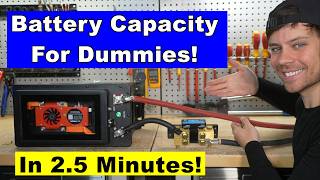
LFP Battery Capacity For Dummies: In Only 2.5 Minutes!
Tutorial
DIY Solar Power with Will Prowse · August 2026
A capacity test reduced to its essentials, with the shunt settings written out: discharge floor 0%, tail current 2–4%, Peukert 1.05, charge efficiency 99%, and a test current of bank capacity divided by five. The companion to our July piece on why the capacity test is the only test that tells the truth.

Product Radar

New and notable components announced or launched this week

Argoseeker A1 & A2 — LiTime
Marine

Brushless clamp-on electric outboards on a 28.22in shaft with wireless remote and cruise control. A1: 24V 700W, up to 60lb thrust (~2HP equivalent), 13.45lb. A2: 48V 2000W, up to 120lb thrust (~5HP equivalent), 16.53lb, with a weed-cutting blade.

Not published (launch pricing behind promo code only) Launched 10 August 2026 Find on Amazon →
LiTime's first product outside batteries. The A2 is roughly 42A continuous at 48V — size the bank for that, not for the thrust rating. Speed figures are the vendor's own; no independent test exists yet.
Monitoring

Plug-in Wi-Fi dongle for the Gobel/Pace BMS RS232 port, feeding Gobel's own cloud monitoring platform via browser or iOS/Android app; one module per parallel bank, plugged into the master BMS.

~€27 Available now; fitted to selected Gobel packs from the factory
Replaces the Waveshare RS232-to-Ethernet workaround with something that doesn't need network skills. It is a vendor cloud, with the usual caveats about who controls it.
Battery

12V 320Ah LiFePO4 with internal heating, sold dual-purpose for starting and deep cycle duty, on Dakota Lithium's 11-year warranty.

$2,299 Available now Find on Amazon →
Listed here because the brand changed hands on 31 July, not because the product changed. Priced well above commodity 12V LFP of the same capacity; the warranty term is the argument for the difference.

Recalls & Safety

Official notices, firmware safety fixes, and reported failures

Safety

Winnebago recalls 96 Ekko motorhomes: a phantom touchscreen input can start the generator by itself

Winnebago is recalling 96 2024–2025 Ekko motorhomes because the touchscreen display "may register unintended or phantom inputs and turn the generator on without the operator's knowledge" (NHTSA #26V498, Winnebago #208). In an enclosed space the consequence is carbon monoxide accumulation. Owners are told to park outside until the fix is applied; notification letters are expected 24 August.

The remedy is the part worth noting: an over-the-air software update, free, with no dealer visit. That is a first in this newsletter's recall coverage — every electrical campaign we've tracked this year has ended with a dealer replacing a part. It also states the trade plainly. Digital switching replaced a physical generator-start switch with a touch target, and a touch target has failure modes a switch does not. Getting the fix by OTA is the same architecture paying you back.

Safety

Forest River recalls 21 Leprechaun and Freelander motorhomes built without a house battery breaker

Forest River is recalling 21 2027 Leprechaun and Freelander motorhomes on which "a battery post mounted breaker may not be installed, leaving the power feed wire without overcurrent protection" (NHTSA #26V503, Forest River #210-2085). Dealers will fit an overcurrent protection device free of charge; owner letters were mailed 3 August.

Twenty-one units and an omitted part, so: small. It belongs here anyway because it is the same failure as the Grand Design inverter-prep breaker campaign and the Alliance RV undersized ground cable — the protection device at the battery, the one component whose absence is invisible until the fault current arrives. An unfused main feed from a lithium house bank is a short circuit waiting for a chafe point, and nothing downstream will save it.