· Edition #26

The Busbar

Will Prowse traced capacity loss in two budget 48V batteries to the BMS rather than the cells, and four RV makers filed recalls for 12V circuits without proper overcurrent protection.

Prowse: two budget 48V batteries lost capacity because of the BMS, not the cells

In one battery, balancing was switched off by default. In a WattCycle server-rack pack, the app shows the balancer working while one cell keeps drifting. Prowse says both use the same BMS.

Will Prowse published three cycle-test videos between 16 and 23 October. In each one, a battery that looked like it had a bad cell turned out to have a BMS problem.

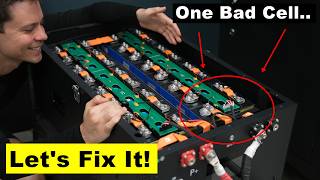
The first is a Yixiang V3 314Ah kit with EVE MB31 cells and Yixiang's new in-house 200A BMS. After 150 cycles it delivered 299Ah, 8% below rating, and cell 1 hit 2.5V while the others were at 3.0V. Prowse swapped that cell out. Then, after asking Yixiang about the settings, he found the app's "balance modes" do nothing. Balancing only runs once "force active balance" and an "equalizing switch" are both on: "It had no balancing before." Once balanced, the pack delivered 310Ah at 160A, and the cell he had removed tested at 311Ah on its own. Prowse says Yixiang is changing the software.

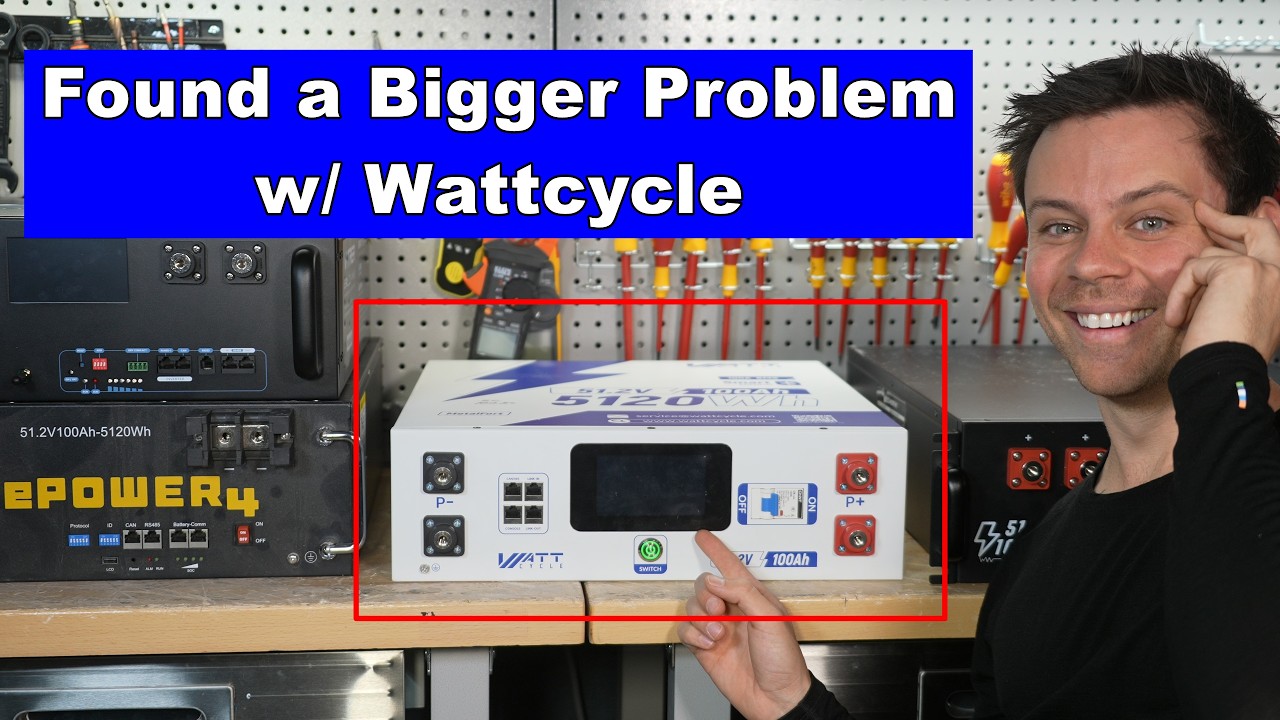
The second is a WattCycle server-rack battery that lost capacity on every 50A cycle; the video title says 6% in 10 cycles. In the 23 October follow-up, cell 16 was the one running low, even though the 3A active balancer showed as on and working. That cell showed no heat, normal internal resistance, and delivered 101Ah on its own. Prowse concludes that the BMS draws more current from one cell during cycling. That is his explanation, not a measured mechanism. He says the same BMS interface and equalizing switch appear on a second brand where balancing is off by default and cell 1 is the one that drifts. From his description, that's the Yixiang kit. He doesn't name who makes the BMS.

A disabled balancer and a balancer that can't keep up look the same in the app: a full battery with a bit less capacity each month. One capacity test when the battery is new won't catch either; Prowse now calls his older single-test reviews "useless" (see our July Background). Neither company has commented beyond what Prowse relays, and we haven't contacted them. His videos carry affiliate links, and he runs Charged Reviews.

BigBattery prices a 16kWh 48V battery at $2,990 and announces a cheaper 12V 314Ah HUSKY

The NEXUS 2 works out to $187 per usable kWh. The 12V HUSKY 2e has no price or ship date yet.

On 21 October, BigBattery launched the NEXUS 2. It is a 51.2V, 16S pack built on 314Ah cells, with about 16kWh usable, for $2,990, or $187 per usable kWh. It delivers 150A continuous (7.6kW) and 270A for one second, and accepts 140A of charge. It has self-heating below 32°F, an IP54 rating, aerosol fire suppression, RS485/CAN, and up to 15 units in parallel. It weighs about 315lb, so this is a cabin or off-grid-home battery. The press release lists no UL certification. On 23 October, BigBattery announced the 12V HUSKY 2e, a 314Ah / 4kWh cut-down version of its 400Ah HUSKY 2 INV, aimed at RVs and boats. It also has self-heating, and CEO Eric Lundgren says it keeps IP65, inverter communication and the 12-year warranty. Price, BMS current and ship date haven't been published.

Victron MPPT RS firmware v1.33 sends PV isolation faults to the GX and VRM

Error #41 fires below 100kΩ isolation resistance. Until now it was only visible in VictronConnect.

Victron released firmware v1.33 for the SmartSolar MPPT RS 450/100 and 450/200 on 20 October. The controllers already measured PV isolation resistance, but you could only see it in VictronConnect. Now error #41 "PV isolation failure", raised when isolation resistance drops below 100kΩ, shows up on GX devices and in the VRM Portal, and can trigger a VRM email alarm. On a 450V string, an isolation fault means damaged insulation or water somewhere in the array wiring, and until now nobody saw it unless they were checking the controller with a phone. Victron says the cause can be temporary (moisture) or structural (damaged cables), and that a fault should be "inspected by a qualified installer as soon as possible". It adds that the update "does not replace the regular inspection" of the array. The update can be installed remotely via VRM.

SolarAssistant beta runs in Docker and replaces Grafana with its own charts

It no longer needs a Raspberry Pi: it installs on any 64-bit Linux PC, NAS or VM. The beta also adds CSV export and new API endpoints.

SolarAssistant's 20 October beta adds Docker support. It can now run on a "64-bit Linux PC, server, NAS or virtual machine" as well as the Raspberry Pi it has always needed. Its Grafana charts are replaced by native ones: drag across a time range to see the lowest, average and highest readings. Chart data and daily or monthly energy totals export to CSV. The REST API gains history, forecast and grid-price endpoints, and device metrics now also go out over WebSocket and MQTT. A new Devices page lets you reorder or forget devices, so numbering stays the same after restarts or cable changes. The beta also adds cell voltages and temperatures for the Pylontech US3000D and Bluetooth reading for Luxpower inverters. If you already run Home Assistant on a mini-PC, that's one less device. It follows the official HA integration from July. It is still a beta.

Dragonfly Energy has until 31 December to fix a negative stockholders' equity

Battle Born's parent reported a $184,000 equity deficit at 30 June, against Nasdaq's $2.5 million minimum.

In an 8-K filed on 23 October, Dragonfly Energy says Nasdaq gave it until 31 December 2026 to meet listing rule 5550(b)(1). The rule requires at least $2.5 million of stockholders' equity. At 30 June, Dragonfly reported a deficit of $184,000, and it doesn't meet the alternative market-value or net-income tests either. The company submitted a compliance plan on 5 October. The filing doesn't say what is in it. If the year-end report doesn't show compliance, Nasdaq can start delisting proceedings, which Dragonfly can appeal. This is a separate problem from the share price: the 1-for-8 reverse split on 12 October dealt with the $1 bid-price rule. For Battle Born owners, the practical question is how long the company stays around to honour its warranties. This is our ninth Dragonfly item since May. The trade-libel suit against Will Prowse is still ongoing.

The Background · Standards Explainer

A fuse protects the wire, so it goes where the current comes from

Three of this week's four RV recalls (see Recalls & Safety) describe the same defect: a 12V conductor that doesn't have the protection it should. K.Z. says a charge line "may not have circuit protection". Forest River says a slide-out switch was installed "without proper overcurrent protection". Alliance says a power-seat cord's fuse "may not provide adequate circuit protection". All three name the same consequence: an overheating wire and a fire.

What the fuse is for

An overcurrent device is sized to the wire, not to the load. Marine How To puts it bluntly: "The bank fuse is there to protect the wire," and it "is not there to protect the down-stream equipment." A slide motor or a seat recliner can fail in its own way. The fuse's job is to make sure that when something downstream shorts, the cable feeding it doesn't become the heating element.

Why position matters as much as rating

A fuse only protects the wire on its load side. The stretch between the source and the fuse has no protection at all. That's why the marine standard, ABYC E-11, requires overcurrent protection within 7 inches of the point where a conductor connects to its source. The limit extends to 72 inches from a battery terminal, or 40 inches from other sources, only when the conductor runs in a sheath or enclosure for its whole length. RVs are built to NFPA 1192 and the RVIA low-voltage standard rather than ABYC, but the physics is the same. A charge line is the clearest example because it has a source at both ends. Current can come from the tow vehicle or alternator in one direction and from the house battery in the other, so a fuse at one end leaves the run unprotected against the battery at the other.

Why it gets missed

A circuit without a fuse works perfectly until it shorts. It passes every function test at the end of a production line and every walk-through at delivery. Nothing about it shows until the insulation chafes through on a slide-out mechanism or a seat frame. None of this week's summaries mention any incidents.

What the summaries leave out

NHTSA's public summaries give no wire gauges, fuse ratings or locations. For K.Z. and Forest River, the remedy is "inspect and reconfigure" or "re-route" the wiring. That suggests the fix is moving or adding a protection point, not swapping a part. For your own build, the check is the same one these factories missed: follow each positive conductor back to where it gets its current, and see what protects it there.

Community Pulse

What the forums are talking about this week

Last week r/vandwellers was about diesel heaters. This week it was about small power systems.

On 23 October, an owner bought two Eco-Worthy 200W flexible HJT panels in a Labor Day sale instead of Bouge RV or Renogy, and one arrived dead. They had already bonded them to the roof with VHB tape and Eternabond, which makes swapping a panel hard. The same day, a 2013 Sprinter owner said two mechanics, one at a Mercedes dealer, couldn't find a parasitic draw. They plan to live with it using a solar battery maintainer and a jump starter. Also on 23 October, a tiny-van owner has a 2kW diesel heater hard-mounted but no battery, so it runs only on hookup power. They say it is also too big for the space, which is a sizing problem as much as a power one. On 22 October, a remote IT worker described a working office on a 100Ah lithium battery and a 1000W inverter with a Starlink Mini, running only the laptop and monitor at any one time.

We can read the opening posts, not the replies.

On the Bench

YouTube picks: builds, teardowns, firmware walkthroughs, and reviews

WattCycle Lost 6% Capacity in 10 Cycles. Budget LFP Cycle Test
Review
DIY Solar Power with Will Prowse · 21 October 2026
Lead source. Three rack batteries on the same 50A cycle, and Prowse's case for dropping single capacity tests in favour of cycle tests. Affiliate links in the description.
One Bad LFP Cell... How to Diagnose and Fix! Bad Cell or Something Else?!
Teardown
DIY Solar Power with Will Prowse · 16 October 2026
Lead source. A month of cycling a Yixiang 314Ah kit, a cell swap on bolted terminals, and the discovery that balancing was never switched on. Affiliate link in the description.
When the BMS wants you to buy a new battery, this trick may help to revive them.
Tutorial
Off-Grid Garage · 23 October 2026
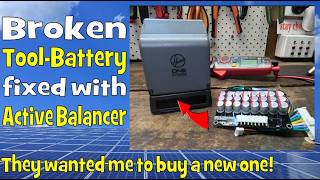
Andy fits an external 5A active balancer to a 6S 18650 stick-vacuum pack whose BMS keeps rejecting it over one 3.1V cell. The first wiring attempt, which follows advice found online, makes the balancer hot; the fix starts at about 15:30. Sponsor disclosed in the description.

Product Radar

New and notable components announced or launched this week

Apex 200 — Bluetti
Battery

2,560Wh power station, 3,200W continuous at 120V (3,600W with an expansion battery), built-in TT-30R RV outlet and a 12V/30A Anderson output; up to 3,000W solar (2,000W at 60–280V plus 1,000W low-voltage); about 59.5lb; expandable to 33kWh.

Not published Early-access sign-up open; Bluetti's product page says on sale 4 November, its press release says US launch 5 November
Unusually, the TT-30R and Anderson port are built in, which is what makes it relevant to RV owners. Cycle life and idle draw aren't published.
12V HUSKY 2e (314Ah) — BigBattery
Battery

12V 314Ah / 4kWh LiFePO4, a lower-cost version of the 400Ah HUSKY 2 INV, with self-heating; aimed at RVs, vans and boats.

Not published Announced 23 October 2026, 'coming soon'
BMS current, weight, dimensions and comms protocols aren't stated for the 2e (News 1).
Apex Mini 24V 125Ah — Redodo
Marine

25.6V 125Ah / 3,200Wh LiFePO4 trolling-motor battery; IP67, Bluetooth, dual-mode self-heating; 15.35 × 7.99 × 10in, 52.47lb; pitched at 70–100lb-thrust motors, with about 18h at 7A claimed.

$629.99 (listed down from $939.99) Launched 19 October 2026
The headline figures (3,200Wh, IP67, dual-mode heating, 70–100lb thrust, 18h at 7A) are identical to Power Queen's 24V 125Ah launch we covered on 1 June.

Recalls & Safety

Official notices, firmware safety fixes, and reported failures

Safety

K.Z. SportTrek fifth wheels: charge line may have no circuit protection (391 units)

K.Z. filed NHTSA recall 26V672000 (K.Z. KZ-2026-02) on 13 October. It covers 391 2026–2027 SportTrek fifth wheels. According to the filing, "the charge line may not have circuit protection", and an unprotected charge line "can cause the wire to overheat, increasing the risk of a fire." Dealers will inspect the wiring and reconfigure it where needed, free of charge. Owner letters are due 12 December 2026. K.Z. customer service: 1-800-768-4016 ext. 154 or 153.

Safety

Forest River Cedar Creek: 12V slide switch wired without overcurrent protection (738 units)

Forest River recall 26V681000 (Forest River 20-2105), filed 16 October, covers 738 2026–2027 Cedar Creek trailers. The slide switch "may have been installed without proper overcurrent protection", which can let the wire overheat and start a fire. Dealers will re-route the 12V slide-switch wiring free of charge. Letters are due 15 December 2026. Customer service: 1-260-593-4000.

Safety

Alliance RV Valor and Delta: power-seat cord fuse, following Lippert's equipment recall (3,686 units)

Alliance RV recall 26V680000, filed 16 October, covers 3,686 2025–2027 Valor and 2026–2027 Delta trailers with certain power seating assemblies. It uses the same wording as the Lippert equipment recall 26E070000 we reported last week: "the power cord fuse may not provide adequate circuit protection". This filing is the vehicle-maker side of that recall. Dealers will replace the power cord free of charge. Letters are due 7 December 2026. Alliance customer service: 1-574-218-7165. As with Lippert's filing, the summary doesn't say whether the cord is on the 12V or the 120V side.

Safety

Forest River Pause: wrong connector on 12V solar panel wires (215 units)

Forest River recall 26V686000 (Forest River 426-2107), filed 20 October, covers 215 2023–2026 Pause travel trailers. "The incorrect connector was used to secure the 12 volt solar panel wires", and a loose wire "may increase the risk of a fire". Dealers will fit a new connector free of charge. Letters are due 28 November 2026. Customer service: 1-574-535-2748. The filing doesn't name the connector type or say where on the solar run it sits.